Rufousnaped Lark

Larger Images Note

You can see a larger version of any image by clicking on it! Alternatively if you hold down the crtl button and click on the image it should open in a new tab!

Please note that all images are the property of Gareth Hazell, if you would like a copy of any of the images please ask.

Thank you.


Sunday, February 13, 2011

Week 4 (Part 2) - Smuts House

After the great days birding at the botanical gardens I wanted more and so decided to take the dog for a walk around the kopje at the Smuts House Museum which is actually the farm that used to belong to General Jan Smuts. I was interested in getting the Little Sparrowhawks that used to breed here but could not find them. The Ovambo Sparrowhawk was present however as well as the usuals around the museum itself including a handsome male Cardinal Woodpecker which was foraging in the white stinkwoods near the restaurant (I was too slow for a picture again). Neddickys are very common on the kopje walk but not so easy to photograph. They are quite drab little birds with non-descript markings and a reedy little call which is not unlike a bicycle pump in action, tseep-tseep-tseep-tseep etc..


Neddicky from different angle
 

The kopje used to be crawling with Dark-capped Bulbuls but their numbers seemed to have decreased over the years. Another bird which is often found on the kopje is the Cinnamon-breasted Bunting but they are also difficult to approach and photograph (perhaps I should wear my leaf suit to get closer?). A distant shot of this attractive bird was all I could manage.


Cinnamon-breasted Bunting

On the way back along the road past the G.E.M. village the seedeaters were having a field day with the tall grass in full seed. As previously mentioned there has been a lot of rain in our area and the grass is quite tall. There were Black-throated Canaries, Grey-headed Sparrows, Red Bishops, Masked Weavers, Common Waxbills and among the more common birds was an adult male Purple Indigobird calling and displaying from the tall trees in the area next to the staff quarters.


Purple Indigobird

A Lesser Honeyguide was observed in the Eucalyptus trees in the parking lot. Not an overly exciting outing as far as birds are concerned but the Indigobird was definately the highlight..

Wednesday, February 2, 2011

Week 04 (Part1) - Walter Sisulu Botanical Gardens


Walter Sisulu Botanical Gardens
 
With the word out that there was a rare Grey Wagtail at the Walter Sisulu Botanical Gardens I knew that this was the place to visit. I had been contemplating travelling the 300 plus kilometers to see the pair at Debengeni Falls but the Grey Wagtail decided to come to me, is that lucky or what?? Unfortunately with having to work to pay for my hobby I had to wait until Friday afternoon to get there. On the way I passed through a heavy thuderstorm which I thought was going to spoil my plans for a quick twitch but luckily the gardens were clear and sunny.

I arrived at the gate to find it already closed and had to perform some major begging and pleading before the gate personnel let me in.....I took a stroll down to the bridge where I had been told the bird was present, only to be told the bird had flown two minutes earlier (If only i hadn't stoppped to photograph the Mousebirds and the Bokmakierie), so along with a few other people the search began.


Speckled Mousebird eating leaves


Bokmakierie with tasty morsel


Bokmakierie posing
 Eventually I saw the bird fly past me and perch in a tree with a beautiful sunset right behind it! I managed to get one dodgy shot before the bird took off in the direction of the waterfall, further searches were unsuccessful and I decided to head for home and try again in the morning.


My first attempt at the Grey Wagtail (lifer views)

I found an immature Amethyst Sunbird on the way out which I chased around for a photo.


Juvenile Amethyst Sunbird

Saturday morning was a beautiful day and I was at the gardens at 06h45 (ok, so I slept in a bit....I work hard sometimes), even though the gates only open at 08h00 I slipped in through the staff entrance (I did pay later of course). My first bird was an immature male White-bellied Sunbird feeding on some Aloe flowers which I was able to photograph at quite close range.


Immature Male White-bellied Sunbird


Enjoying some nectar

There were a few bulbuls about and a Steppe Buzzard soared over the waterfall, Canaries chirped and whistled from the tops of the trees and Red-chested Cuckoos called from the taller trees near the stream (is this poetic or what?).

While waiting for the Wagtail to make his appearance I had time to stroll around the gardens which was almost swarming with Cuckoos, I had good views of Red-chested, Black and Didericks Cuckoos.


Red-chested Cuckoo
 

African Black Cuckoo

 While strolling through the wooded part of the gardens I picked up a Southern Boubou and had a close shave with an active bee hive in the process.


Southern Boubou


African Bees

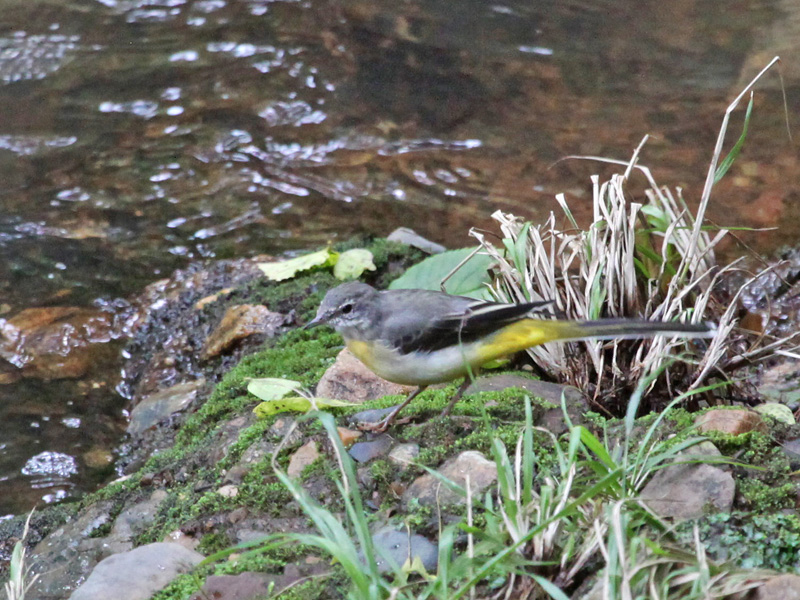
Eventually the Grey Wagtail put in an appearance at about 09h00 (my kind of bird) but he  stuck to the shadows on the far bank of the stream, just to test our photography skills..... I was able to get a few shots  which I thought were keepers but as you can see......


Grey Wagtail

After a long wait at a section of the river that looked like good wagtail foraging habitat (just around a bend in the river from the wagtails favoured spot), I decided to call it a day and headed for the gate. On the way out again I then spent a few minutes photographing a confiding Tawny-flanked Prinia.


Tawny-flanked Prinia (3)

All in all it was a great mornings birding, with some good conversation and relaxing surroundings. I suppose I will have to come back again if the wagtail is still here next week for another photo attempt. Cheers!

Saturday, January 29, 2011

Week 03 - Garden Birding again

Another week of no birding and I am starting with withdrawal symptoms, you know......moodiness, lack of focus, depression, etc.... I am getting rather desperate and resorted to photographing the Laughing Doves in the garden.


Laughing Dove
 
The Diedericks Cuckoo has been fairly vocal around the garden lately, probably due to the increase in Weaver nests and possibly the appearance of Garden Acraea larvae on the Wild Peach (Kiggelaria africana) tree....must check that...


Garden Acraea
  One highlight was the visit by a Streaky-headed Canary again, they also seem to be visiting more and more and I often hear them calling around the garden (it helps if you can distinguish the calls from Black-headed Canary which have always been common in our garden). This latest visitor was even obliging enough to sit still for a photo!!


Streaky-headed Canary

Another bird which has been fairly scarce this year is the African Paradise Flycatcher, last year they nested in the garden and were a constant source of joy as they dipped in the pool, preened on the bushes and eventually fed their chicks right next to the patio......I have heard them calling and seen them on a few occasions this year only.


African Paradise Flycatcher - Female

I am going to have to get out for some proper birding soon or I might not make it.........watch this space!

Thursday, January 27, 2011

Week 02 - Bishop Bird Park

Rather a busy week with going back to work and sorting out the garden after our holiday break. We have received huge amounts of rain so the grass was almost knee height.... The birds were enjoying the garden, Common Mynahs had taken up residence in the roof and complained bitterly every time we past "their" area.

With so much to do at home birding had to take a back seat but I did manage to get out to Bishop Bird Park again. All the usuals were still around and I was hoping to pick up a Garden Warbler or two but these were not calling and the main purpose of the visit was to walk the dog. One surprise in the park was a White-winged widow in breeding plumage, a first for me in this particular park.


White-winged Widow

A pair of Spotted Thick-knees were running around with two small chicks in tow and immediately went into broken wing mode as we walked towards them. These chicks are extremely well camouflaged birds which duck in under the grass tufts when you approach becoming invisible in seconds.


Spotted Thick-knees
 
This park is a roosting site for a large flock of European Bee-eaters and they are always found here in the summer months. Seed-eaters are well represented with good numbers of Red-Bishop, Southern Masked Weaver, Black-throated Canary and Cape Sparrow.

Cape Glossy Starlings seem to be present in small groups and Black-chested Prinia are quite common. All in all it was a rushed outing with not much else to get excited about.

Friday, January 21, 2011

Week 01 - The trip Home

Sorry for taking so long with this post, there seemed to be problem with Blogger which looks as if it has been sorted out. I could not add or edit any blogs since the 6th Jan but it looks as if there were many people with the same problem. Hopefully it is resolved and I can keep you guys updated weekly again..

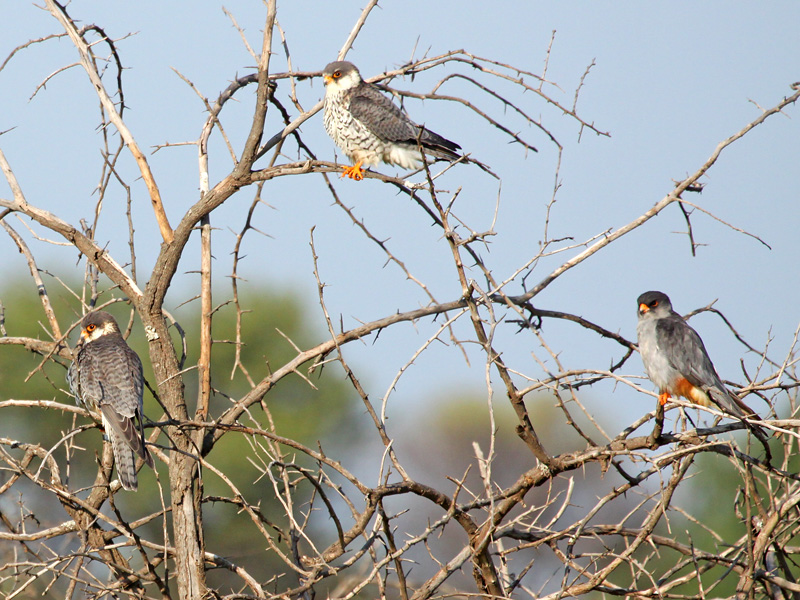
Week 01 birding was restricted to watching birds on the drive home. I'm getting quite good at identifying birds by jizz at 120km/h...no bragging intended (I probably mis-identified a few along the way). The bird list I compiled is quite varied, ranging from forest birds in KZN to grassland and water birds on the escarpment. All the typical roadside species were seen along way with 4 out of 6 Widowbird species identified, Long-tailed, Red-collared, White-winged and Fantailed were all seen from the car. The most noteworthy sighting being a huge mixed flock of Amur Falcons and Black-winged Pratincoles seen hunting over grassland between Warden and Villiers. JP will be jealous because we looked for the prats around Jo'burg on his last visit but couldn't find any. Maybe next time JP.


Amur Falcons


Black-winged Pratincoles

Another bird that we saw quite a lot of on the trip back was Spur-winged Geese, they seemed to be in almost every field we past. I wonder if the farmers were happy with that?


Spur-winged Goose
  Not much more to report from week 01 unfortunately. By the way I kind of cheated on the photos for this post because it is fairly difficult if not nigh on impossible to get good photos from the car at 120km/h so I used photos I had taken earlier on in 2010. Hope you don't mind, Toodles!!

Thursday, January 6, 2011

Week 52 (Part 2 - Oribi Gorge)

Oribi Gorge access road

I did manage to get out to do some birding on my own at the nearby Oribi Gorge on one occasion. My primary goal here was to try to locate the Knysna Woodpeckers that I had heard in 2008 and which are supposedly quite common here. Needless to say I dipped on the woodpecker. Birding in the gorge is quite challenging as the forest is quite thick and the birds are cryptically coloured and very shy. Special birds here were a Juvenile Crowned Eagle on the highway before the Port Shepstone turn-off, Long-crested Eagle, Knysna Turaco, Narina Trogon, African Broadbill, Forest Weaver, Emerald Cuckoo and Mountain Wagtail. It is important to know your bird calls here as you often hear thebirds calling but are unable to see them in the forest. I normally listen for Square-tailed Drongos which signifies a bird party and then pick off the different species moving together through the forest.


Black-headed Oriole


Juvenile Crowned Eagle


Shy Long-crested Eagle


Mountain Wagtail


Yellow-banded Acraea

After travelling through the gorge we visited Lake Eland Nature Reserve on the Oribi Flats which also has some great birds like Croaking Cisticola, Broadtailed Warblers, Grey-crowned Cranes, White-necked Raven, Black Swift and Drakensberg Prinia. It also has some interesting caves to visit and a death defying suspension bridge over the gorge!


Grey-crowned Cranes


Greater-striped Swallow gathering mud


Protea flowers growing wild in the veld

We have had a lot of rain this season and birders are reporting some great birds from some of the more popular sites. The warblers should start arriving now and also while I was away the two Grey Wagtails have contiued to show well at Debegeni Falls in Magoebaskloof so perhaps another twitch is due...watch this space.

Week 52 - South Coast (Part 1 - Ramsgate)


Ramsgate main
beach

We spent our summer holidays on the Natal south coast in a small little town called Ramsgate. It is typical of south coast towns with lush coastal forest growing in between the houses creating a great environment for wild birds. Trying to get some decent birding in while on a family holiday with non-birders is exremely challenging so most birds recorded were done so while out walking along the promenade or sitting on the beach. Without any effort I managed a total list for Ramsgate of 53 species in 12 days.

The majority of species recorded are also found at home but there are some birds I would normally  have to work for at home are common garden birds in Ramsgate. Spectacled Weaver, Yellow-fronted Canary, Purple-crested Turaco, Pied Wagtail, Violet-backed Starling, Black-bellied Starling, and Golden-tailed Woodpecker fall into the special category for garden birds in my book. there was even a Woolly-necked Stork that flew into the beachfront most afternoons to beg food at the holiday flats.


Spectacled Weaver (Male)


Black-bellied Starling with faecal sac after feeding the chicks


Black-bellied Starling


Brown-hooded Kingfisher on the garden fence


Lesser-striped Swallow gathering mud for the nest


Lesser-striped Swallow calling


Tawny-flanked Prinia

The most exciting birds encountered in Ramsgate were three Magpie Mannikins sighted along the promenade (which were scared off by another family out walking) and an Osprey which plunged into the sea after a fish close to the rocks and then shook himself off in flight, lined the fish up with the direction of flight and flew off down the coast again. Birds were quite tame and easily approachable (except when you have a camera). The male Violet-backed Starling we spotted continued to forage less than 2m from us on one of our morning walks ( I did not have a camera with me)..